[gtranslate]

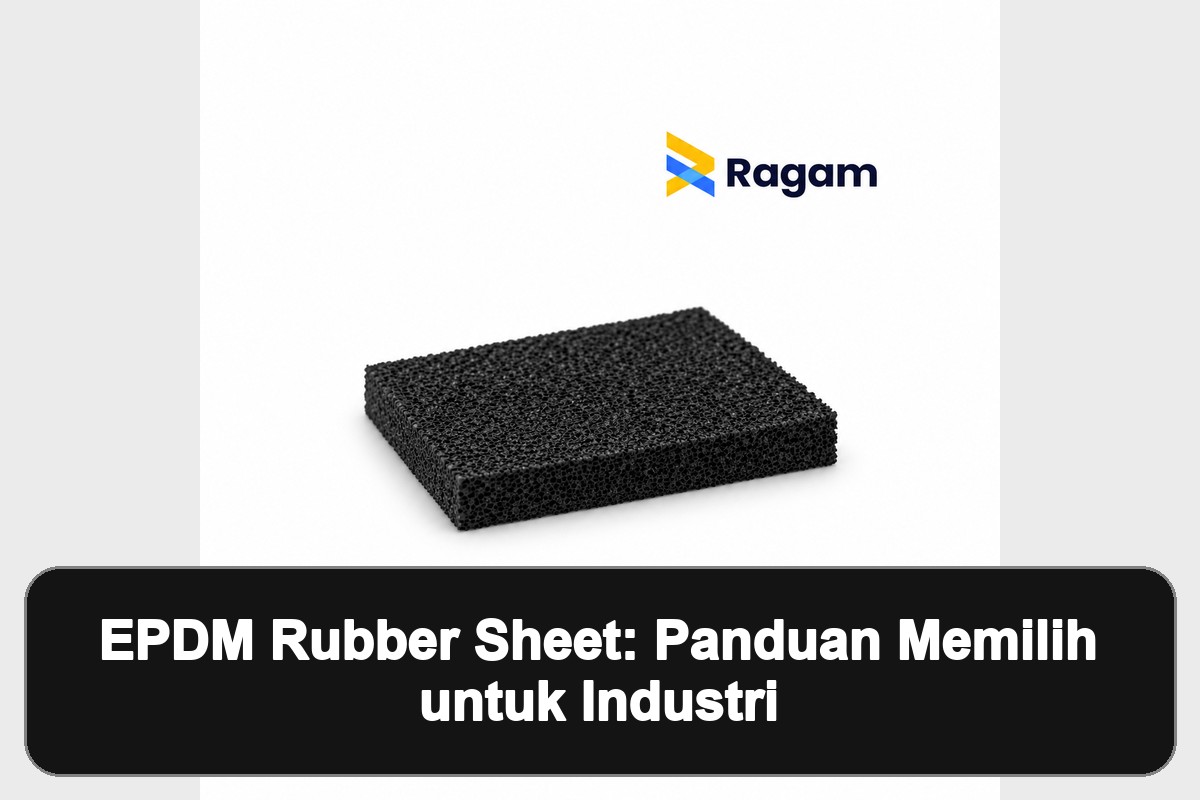
EPDM Rubber Sheet: Panduan Memilih untuk Industri
Panduan memilih EPDM rubber sheet dengan mempertimbangkan aplikasi, lingkungan kerja, ketebalan, dan data spesifikasi pemasok.

What Makes EPDM Rubber Sheet the Right Choice
If you’ve been shopping for rubber sheet material and keep running into the name EPDM, there’s a good reason for that. Ethylene Propylene Diene Monomer rubber has earned its place as one of the most widely used elastomers in industrial and construction applications. But “widely used” doesn’t automatically mean “right for your project.” Understanding what this material actually does well — and where it struggles — is the first step to making a smart purchase.
Key Properties That Set EPDM Apart from Other Rubber Types
EPDM’s defining strength is its resistance to environmental degradation. It handles prolonged UV exposure, ozone, and weathering better than most synthetic rubbers, including neoprene and natural rubber. This makes it a natural fit for anything that lives outdoors or faces extreme atmospheric conditions.
The working temperature range is another practical advantage. Most commercial grades of EPDM rubber sheet perform reliably from around -40°F (-40°C) up to 250°F (121°C), giving it solid versatility across seasons and climates. It also resists steam and hot water well, which opens up additional use cases in plumbing and HVAC applications.
Where EPDM Outperforms and Where It Falls Short
EPDM performs exceptionally in weather sealing, roofing membranes, gaskets exposed to water or steam, and outdoor expansion joints. Its flexibility at low temperatures means it won’t become brittle and crack during cold snaps the way some materials do.
The critical limitation — and one that catches buyers off guard — is its poor resistance to petroleum-based oils, fuels, and most hydrocarbon solvents. If your application involves contact with engine oil, diesel, or similar fluids, EPDM is the wrong material. Nitrile (NBR) or Viton would be more appropriate choices. Always identify the chemical environment before selecting any rubber sheet, not after.
The 5 Factors That Actually Matter When Choosing EPDM Sheet
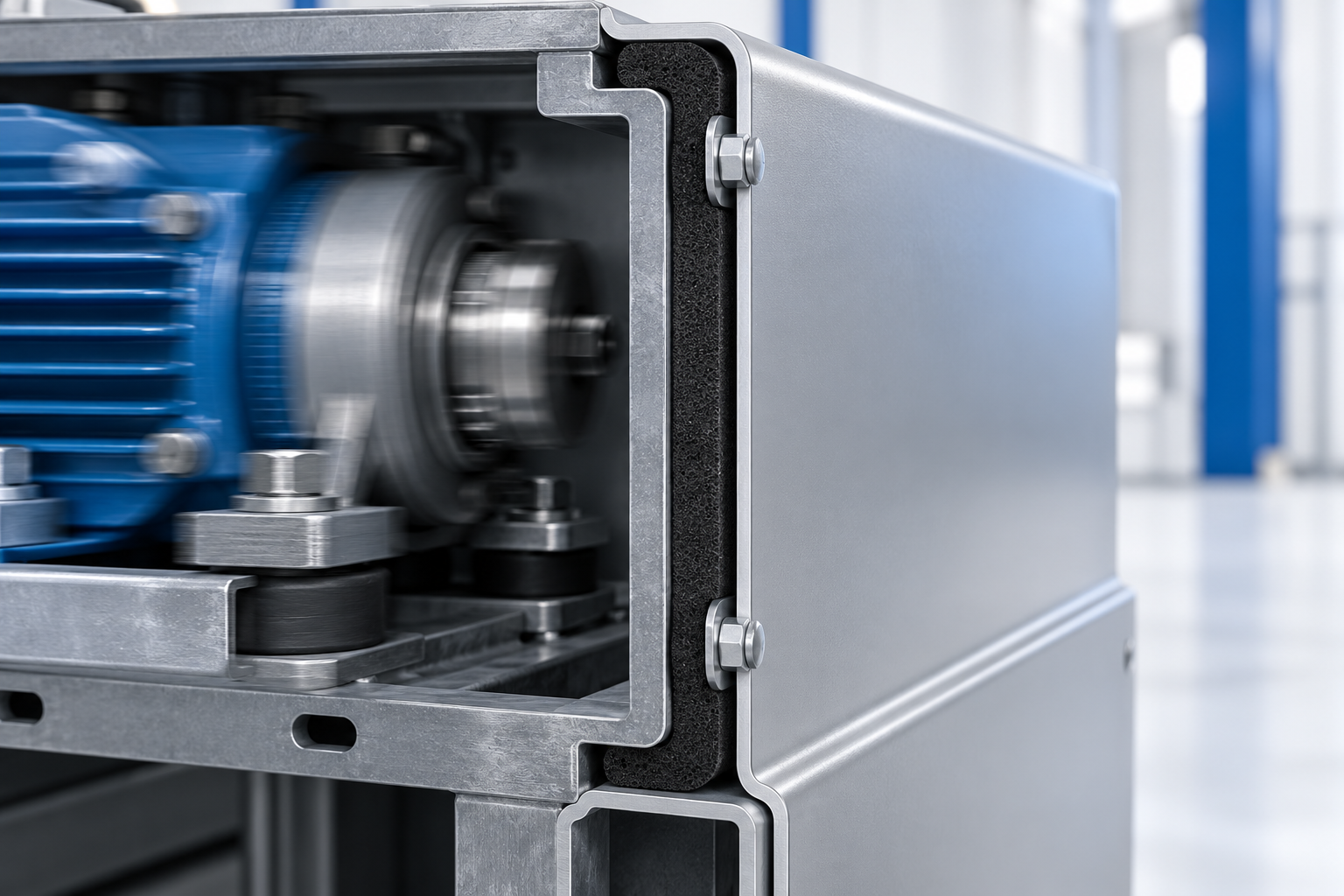
Once you’ve confirmed EPDM is chemically compatible with your application, the next step is drilling into the physical and mechanical specifications. Here are the five factors that make the most practical difference.
Hardness (Shore A) and What It Means for Your Application
Rubber hardness is measured on the Shore A scale, and for EPDM sheets, you’ll most commonly see ratings between 40 and 80. A lower number (40–50 Shore A) means softer, more compressible rubber — useful for conformable seals and vibration damping. Higher values (65–80 Shore A) indicate a firmer sheet better suited to structural padding, wear surfaces, or applications where you need dimensional stability under load.
A common mistake is defaulting to whatever hardness a supplier has in stock rather than specifying what the application actually needs. For gaskets in bolted flange connections, for instance, a 60 Shore A material often provides the right balance between sealing pressure and resistance to extrusion.
Thickness Tolerances and Why They Vary by Grade
Nominal thickness is the number in the product listing. Actual thickness can be different — sometimes significantly. Standard commercial-grade EPDM sheets can carry a thickness tolerance of ±10%, meaning a 3mm sheet could measure anywhere from 2.7mm to 3.3mm. For non-critical applications like floor matting or protective padding, that’s usually fine. For precision gaskets or sealing applications, it isn’t.
Always check the tolerance specification on the data sheet. If the supplier doesn’t publish it, ask directly. If they can’t answer, that’s information too.
Surface Finish: Smooth vs. Embossed vs. Cloth-Inserted
Surface finish affects both function and handling. Smooth-finish EPDM sheet is the most versatile and widely available. Embossed or textured finishes improve grip and reduce the tendency of sheets to stick together during storage. Cloth-inserted (fabric-reinforced) EPDM adds dimensional stability, making it significantly easier to cut and punch into gaskets without the material stretching or distorting during fabrication.
If you’re producing die-cut gaskets at any volume, cloth insertion is worth the small cost premium. It reduces waste and keeps tolerances tighter through the cutting process. For more on fabrication considerations, see this artikel terkait on rubber gasket manufacturing basics.
EPDM Compound Type: Commercial vs. ASTM D2000 Spec
Commercial-grade EPDM sheet is manufactured to meet general performance benchmarks and is appropriate for most industrial, construction, and maintenance uses. ASTM D2000-grade material is produced to a defined specification that standardizes physical properties like tensile strength, elongation, hardness, and heat resistance to tighter tolerances.
ASTM D2000 compliance becomes important in automotive, aerospace, and defense supply chains where material traceability and consistent properties are contractual requirements. If your end customer or application standard specifies a particular D2000 classification, don’t accept a substitute without written confirmation that it meets the equivalent spec.
Color and Its Role Beyond Aesthetics
Black EPDM is the industry standard for outdoor and UV-exposed applications for a functional reason: carbon black loading significantly improves UV resistance compared to colored compounds. When pigments replace carbon black, the rubber’s long-term outdoor durability typically decreases. Gray, red, or white EPDM sheets are available and useful in specific contexts — clean rooms, food processing environments, or color-coded maintenance systems — but they shouldn’t be used as direct substitutes for black EPDM in exposed outdoor applications without checking the UV resistance data.
Matching EPDM Sheet Grade to Your Specific Use Case
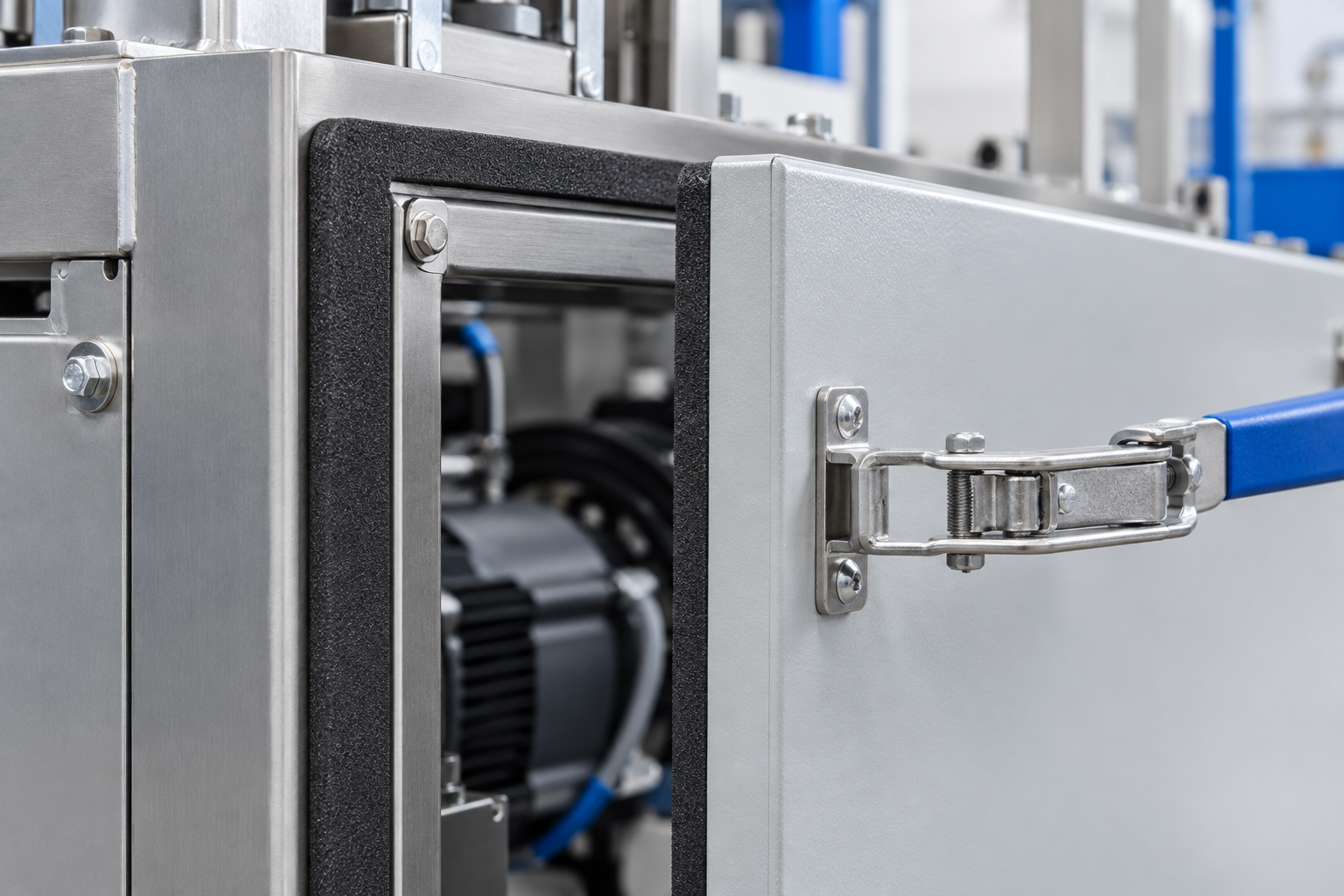
Knowing general EPDM properties is one thing. Knowing which specific grade or configuration fits a particular job is where most buyers save time and money.
Roofing and Waterproofing Membranes
Roofing EPDM is a distinct product category from industrial sheet rubber. It typically comes in 45 or 60 mil (1.1mm or 1.5mm) thickness and is formulated for long-term weathering performance as a flat-roof membrane. Industrial EPDM sheet is generally not a substitute — the formulations, dimensions, and installation systems are different. If you’re specifying for a roofing project, source from roofing-specific product lines.
Gaskets, Seals, and Compression Pads
For static gasket applications, look for EPDM sheet with a compression set below 25%, good thickness consistency, and hardness matched to the flange load. Cloth-inserted grades simplify fabrication. For dynamic seals or compression pads absorbing repeated loading, confirm the compound’s fatigue resistance with the supplier’s technical team — not all commercial grades are rated for cyclic loading.
Outdoor Expansion Joints and Weatherstripping
This is the application EPDM was practically designed for. Its combination of UV resistance, ozone resistance, and low-temperature flexibility makes it a reliable long-term performer in expansion joints, door seals, and weatherstripping. Black grades are preferred for maximum outdoor durability, and the Shore A hardness should be selected based on the compression force available in the specific joint design.
Food-Contact and Potable Water Applications
This is a category where the specification stakes are higher. EPDM can be formulated to meet FDA requirements for food-contact materials and NSF/ANSI 61 certification for contact with drinking water. However, not all EPDM sheet is food-grade, and the certifications need to be verified at the product level — not assumed from general EPDM properties. Always request documentation of the specific certification, including the scope of the listing, before placing an order for any water or food-contact application.
How to Read an EPDM Data Sheet Without Getting Lost
A product page tells you what a supplier wants to sell. A technical data sheet (TDS) tells you what the material actually does. If you can’t get a TDS from a supplier, that’s a red flag worth paying attention to.
Tensile Strength and Elongation — What Acceptable Ranges Look Like
Tensile strength for commercial EPDM sheet typically falls between 800 and 1,500 psi (5.5 to 10.3 MPa), with elongation at break ranging from 200% to 400% or more. These numbers confirm the material won’t tear easily during installation or under service stress. If a data sheet shows tensile strength significantly below 800 psi for a standard grade, it’s worth asking about the compound quality.
Compression Set: The Number Most Buyers Ignore
Compression set measures how much permanent deformation remains after a rubber sample has been compressed and released. It’s expressed as a percentage: lower is better. For sealing applications, a compression set below 25% is a practical benchmark — it means the material will recover most of its original thickness after being compressed in a joint or gasket groove, maintaining the seal over time.
High compression set (above 40–50%) means the rubber takes a permanent set quickly and will start leaking sooner. This is the single most important property for sealing performance, and it’s frequently absent from commodity product pages.
Chemical Resistance Tables and How to Interpret Them
Chemical resistance ratings in EPDM data sheets are usually expressed as ratings like “Excellent,” “Good,” “Fair,” or “Not Recommended.” These ratings are compound-specific, not universal to all EPDM. A rating of “Good” for a dilute acid in one formulation might be “Fair” in another. If chemical compatibility is critical to your application, ask for immersion test data or request samples for your own testing rather than relying entirely on published tables.
Sourcing and Quality Red Flags to Watch in 2026
The rubber sheet market includes both quality manufacturers and commodity resellers who compete primarily on price. The difference matters more than it might seem when you’re relying on the material to perform in a sealing or structural role.
Recycled vs. Virgin EPDM Compound — How to Tell the Difference
Recycled or re-milled EPDM compound uses reclaimed rubber that has been reprocessed. It’s generally cheaper and can perform adequately in low-demand applications like floor matting or protective padding. The problems emerge in critical applications: recycled compound tends to show inconsistent Shore A hardness across a batch, elevated compression set, and lower tensile strength. For gaskets, seals, or any application where consistent mechanical properties matter, specify virgin compound explicitly.
Questions to Ask Your Supplier Before Placing an Order
- Can you provide a current batch test report (not just catalog specs)? A reputable manufacturer can supply actual test results from the production run, not generic published averages.
- Is the compound virgin or recycled? The answer should be direct, not vague.
- What is the thickness tolerance for this product? Acceptable answers cite a specific percentage or range.
- What ASTM or ISO standards does this material comply with? Ask for documentation, not just a verbal claim.
- Do you have the specific certification for food-grade or NSF 61 if required? Certification must be at the product level.
Common Spec Misrepresentations in Commodity EPDM Listings
The most common misrepresentation in lower-cost EPDM listings is presenting recycled compound as equivalent to virgin material, or marketing a commercial-grade product with ASTM D2000 language without actual compliance documentation. Another frequent issue is listing nominal thickness without disclosing tolerances, which can lead to significant dimensional variation in the received material.
Price alone is a genuinely poor quality indicator in this market. A significant price gap between suppliers for the same nominal specification usually reflects a difference in compound quality, not a bargain find.
Frequently Asked Questions About EPDM Rubber Sheet
Can EPDM rubber sheet be used with motor oil or hydraulic fluid?
No — this is one of EPDM’s well-known limitations. It swells and degrades when exposed to petroleum-based oils, fuels, and most hydrocarbon fluids. For oil and fuel environments, nitrile (NBR) rubber sheet is the standard choice. Viton (FKM) is used where both high temperature and chemical resistance are needed.
What’s the difference between 40 mil and 60 mil EPDM for roofing?
The difference is thickness and durability. 40 mil (approximately 1mm) is lighter and lower cost, suited for applications with minimal physical stress. 60 mil (approximately 1.5mm) offers greater puncture resistance and longer service life, particularly in foot-traffic areas or installations over rough substrates. For most commercial roofing projects, 60 mil is the more practical specification.
How do I know if an EPDM sheet is food-grade safe?
Food-grade and potable water-safe EPDM must carry specific certifications: FDA compliance under 21 CFR for food contact, or NSF/ANSI 61 listing for drinking water system components. These certifications must be documented at the product level by the manufacturer. Do not assume that generic EPDM is food-safe — always verify with the supplier’s certification documentation before using any rubber material in food or water contact applications.
How long does EPDM rubber sheet last outdoors?
Properly specified and installed EPDM performs well in outdoor applications for many years. Roofing membranes are commonly rated for 20–30 year service life. Industrial EPDM sheet used in weatherstripping and expansion joints typically lasts 10–20 years depending on UV exposure, temperature cycling, and mechanical loading. Black carbon-loaded compounds consistently outperform colored grades in long-term outdoor durability.
Making the Right Call Before You Order
Choosing the right EPDM rubber sheet comes down to matching the material’s actual properties to what your application genuinely requires. Confirm chemical compatibility first — especially ruling out oil and fuel contact. Then specify hardness, thickness tolerance, surface finish, and compound grade based on the mechanical demands of the job rather than defaulting to whatever is cheapest or most available.
Request a full technical data sheet from any supplier you’re considering, and don’t hesitate to ask for batch test reports on compression set and hardness. Those two numbers alone will tell you more about real-world performance than most product listings. If a supplier can’t provide them, it’s a clear signal to look elsewhere.
Getting the specification right before ordering saves rework, prevents premature failures, and ultimately costs less than sourcing the wrong grade twice. Take the time to verify — the material will do the rest.